Sustainability in London:
Encouraging responsible habits on the tube
My time interning in the art district, surrounded by murals, galleries, and street art that played a huge role in shaping my visual decisions. This project became a way for me to merge everything I was learning in class with the artistic energy that surrounded me in the city.
I knew I wanted these posters to communicate ideas about waste, fast fashion, and personal responsibility, but I also wanted them to feel engaging and visually memorable. London has a strong culture of public art and design, so I felt inspired to create something that would appeal to people who appreciate creativity and aesthetics. I did not want these messages to feel like warnings or instructions. Instead, I wanted them to capture attention through color, texture, and cultural references.
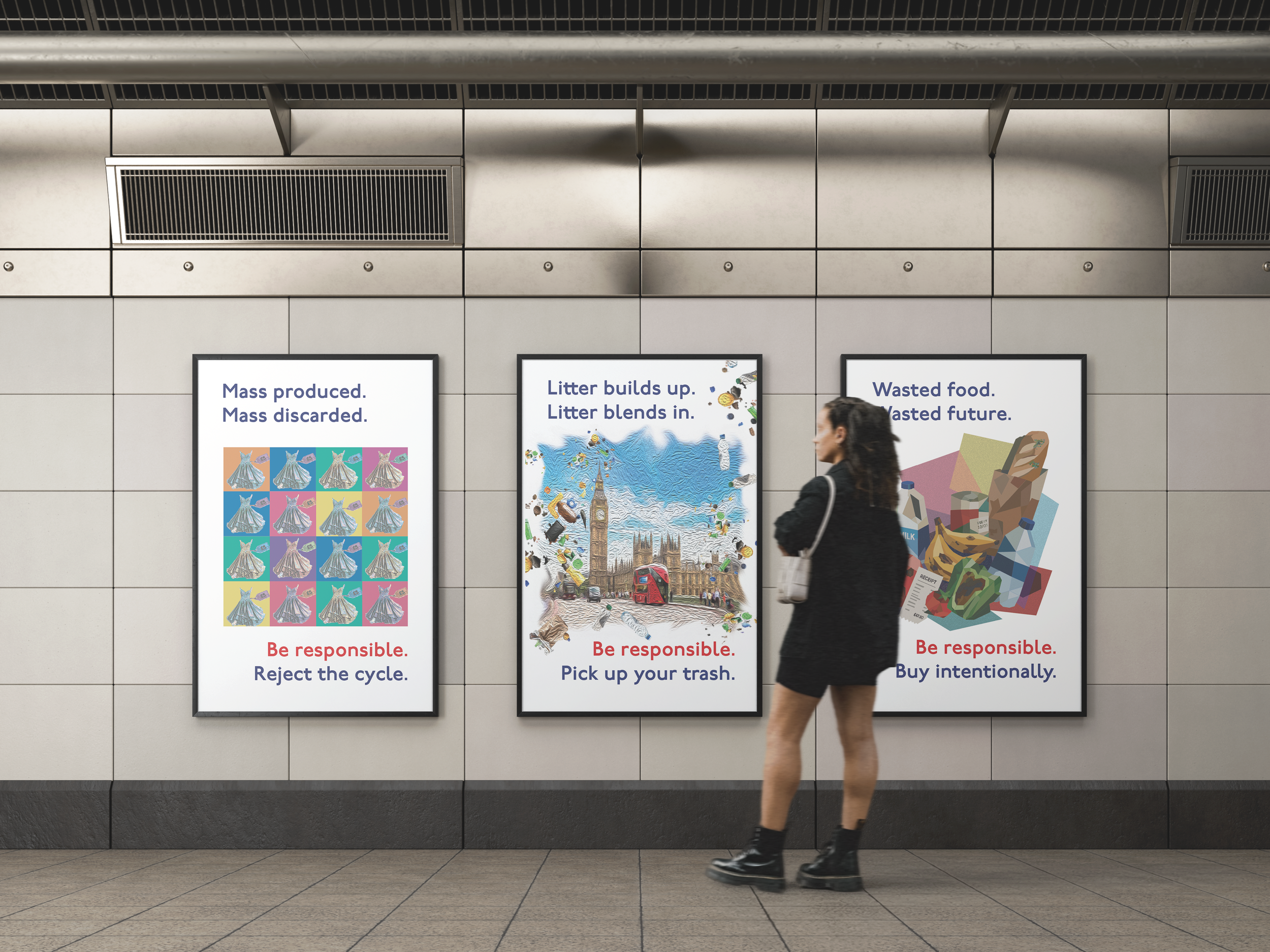
Each poster references a different artist and style to support the message behind it.
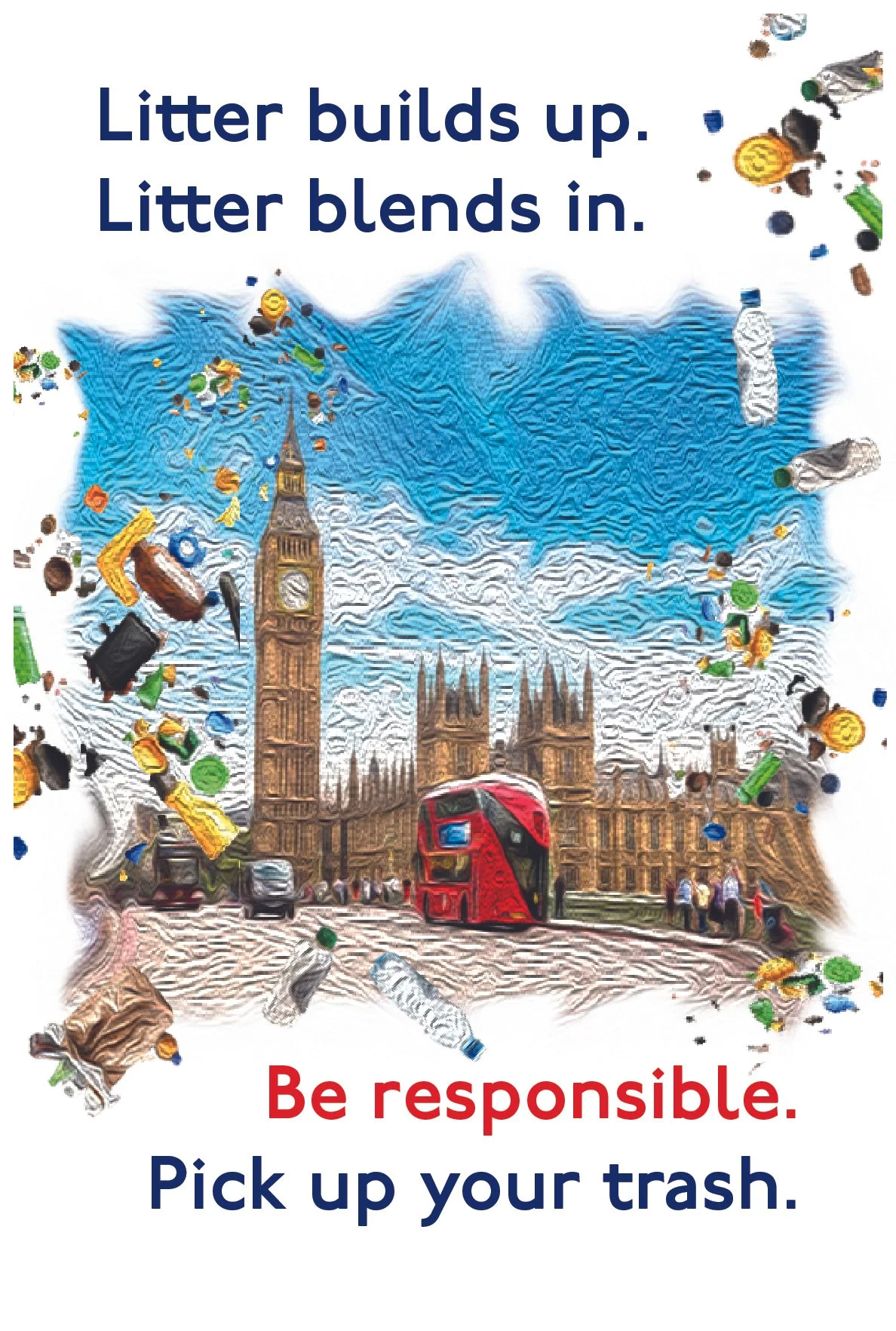
The first poster draws from Van Gogh’s swirling textures and movement, with litter almost disappearing into the landscape to reflect how pollution can become normalized when people see it every day.
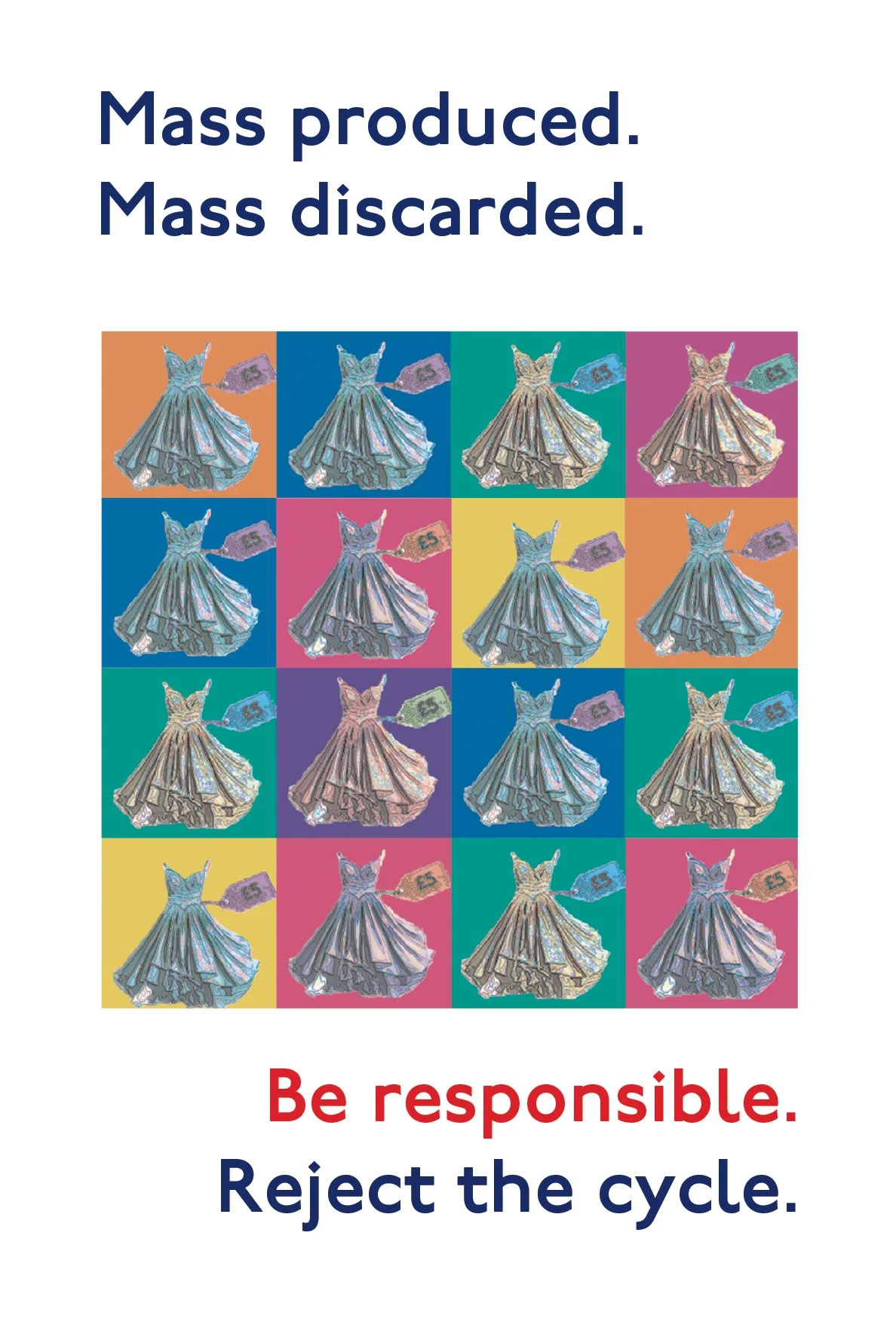
The second poster references Andy Warhol’s repetition and pop culture imagery to critique fast fashion and cycles of mass production and disposal.
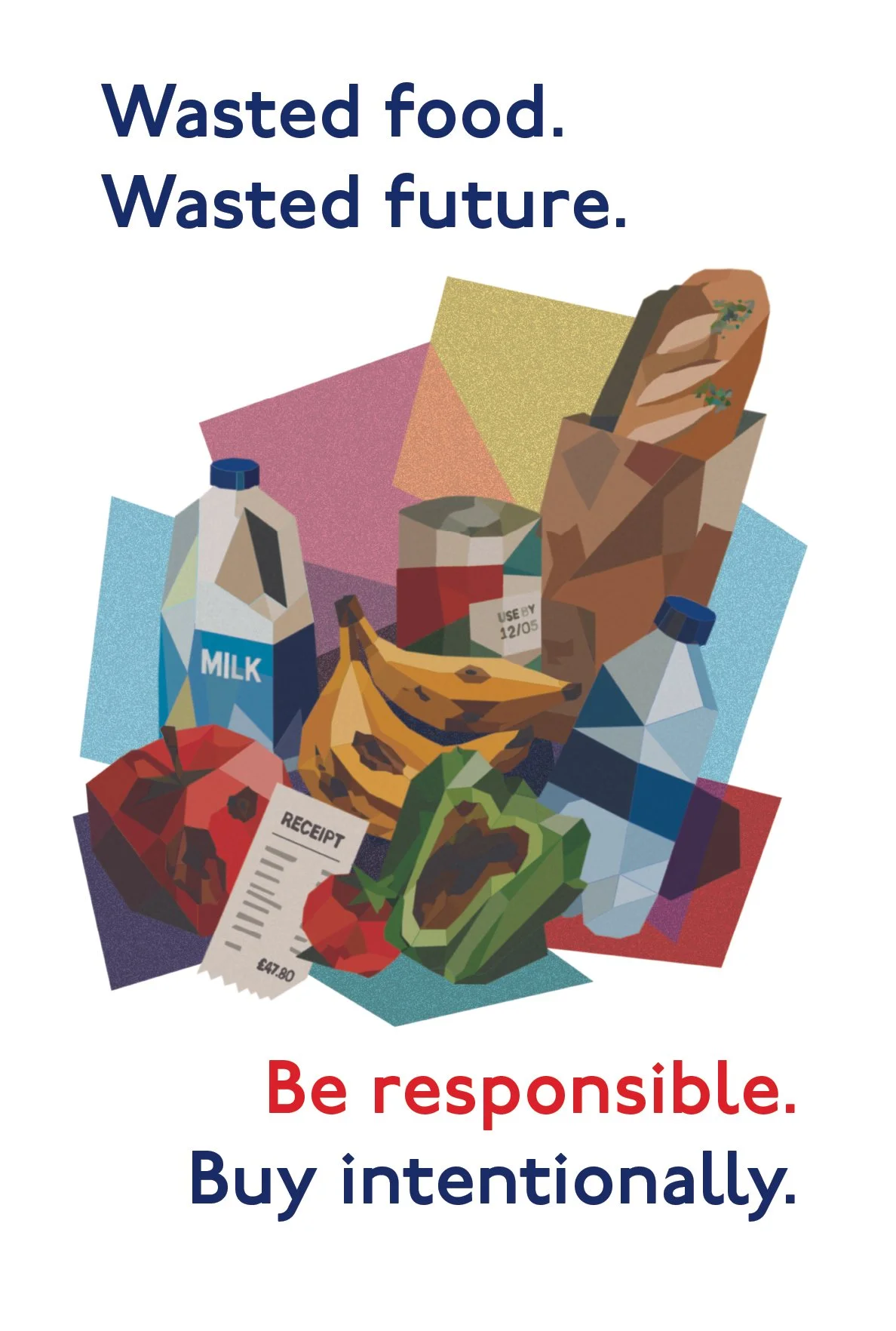
The final poster uses cubist-inspired fragmented grocery imagery and rotting food to highlight overconsumption and food waste.